Your oral health is a vital window into your overall well-being. While a minor canker sore might resolve on its own, other symptoms can be early warnings for more significant health issues that require professional attention. Understanding how to recognize the signs of a mouth infection is the first step toward protecting your health and finding peace of mind. This guide will help you understand what each sign could mean and, most importantly, when it’s time to seek compassionate, expert care.
Understanding the Most Common Mouth Infection Symptoms
Your mouth can provide early warnings for health issues. Learning to recognize symptoms before they become severe is key to maintaining both your oral and overall health. Let’s explore what each sign could mean for you.
Pain, Swelling, or Tooth Sensitivity
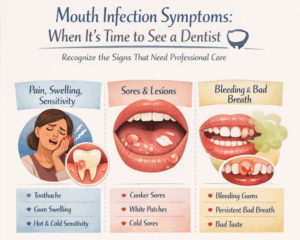
One of the most common indicators of an infection is pain. This could manifest as a sharp, throbbing pain that keeps you awake at night or a persistent, dull ache that won’t go away. This discomfort often points to a localized infection, such as a tooth abscess, which is a pocket of pus trapped at the root of a tooth. You might also notice increased sensitivity to hot or cold temperatures. A key sign to watch for is swelling, whether it’s in the gums around a specific tooth, in your cheek, or even in your neck.
Sores, White Patches, or Red Lesions
Visual changes inside your mouth are another clear sign that something is amiss. These can include canker sores, which are small, painful ulcers that appear inside the cheeks or on the tongue. You might also notice creamy white patches, a classic symptom of oral thrush, which is a fungal infection. On the exterior, cold sores—small blisters that form on the lips—are caused by the herpes simplex virus. While some sores are benign, any lesion that doesn’t heal should be evaluated professionally.
Bleeding Gums, Bad Breath, or a Bad Taste
Bleeding gums, especially after brushing or flossing, are a classic symptom of gingivitis, the earliest stage of gum disease. This condition is caused by plaque buildup along the gumline. If left unaddressed, it can advance to periodontitis, a more severe infection that can damage the bone supporting your teeth. Alongside bleeding gums, persistent bad breath or a constant bad taste in your mouth can also signal an underlying infection that needs to be treated.
When to See a Dentist: Key Warning Signs You Shouldn’t Ignore

While some minor symptoms can be managed with diligent home care, others are clear signals that you need professional dental expertise. Knowing when to stop waiting and start acting is crucial for your health and can prevent a small problem from becoming a serious one.
Symptoms That Require Immediate Attention
Certain symptoms should never be ignored. If you are experiencing any of the following, it is essential to seek professional care right away:
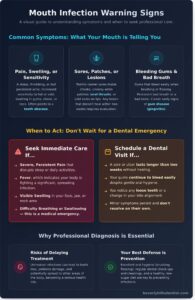
- Severe, persistent pain that disrupts your sleep or daily life.
- A fever, which indicates your body is fighting a significant infection.
- Visible swelling in your face, jaw, or neck area.
- Difficulty breathing or swallowing, which should be treated as a medical emergency.
Signs Your Infection Isn’t Healing on Its Own
Sometimes, the issue isn’t a sudden, severe symptom but one that simply won’t go away. It’s time to schedule a dental visit if you notice a sore or ulcer that lasts longer than two weeks, gums that continue to bleed easily despite gentle oral hygiene, or any sign of loose teeth or a change in your bite alignment.
Why a Professional Diagnosis Is Essential
In the age of online information, it can be tempting to self-diagnose, but this can lead to incorrect or dangerously delayed treatment. An experienced dentist can perform a thorough examination to identify the true cause of your symptoms, ensuring you receive the right care promptly. Early treatment is the best way to prevent minor issues from becoming complex, painful, and costly problems. Don’t guess with your health. Schedule a gentle examination.
How We Provide Compassionate Care for Mouth Infections
We believe that exceptional dental care is a blend of clinical excellence and a genuinely compassionate approach. When you are feeling vulnerable or in pain, you deserve to be treated with warmth and respect. Our primary goal is to restore your oral health and your comfort in a sophisticated, calming environment.
A Gentle and Thorough Diagnostic Process
Your journey to wellness begins the moment you step into our boutique-style office. We start by listening carefully to your concerns, giving you the time and space to explain what you’re experiencing. Using advanced diagnostic technology, we can achieve an accurate and detailed understanding of your condition. We then take the time to explain our findings clearly, ensuring you feel informed and empowered to make decisions about your health.
Personalized Treatment for Lasting Relief
There is no one-size-fits-all solution in dentistry. Your treatment plan will be meticulously tailored to your specific diagnosis and personal needs. Whether your condition requires a deep cleaning to address gum disease or restorative care to treat an abscessed tooth, our focus is on providing lasting relief. We are dedicated not only to treating the immediate infection but also to providing you with the guidance and care needed to prevent it from recurring.
Frequently Asked Questions About Mouth Infections
Can a mouth infection go away on its own?
While very minor irritations might resolve, a true bacterial or fungal infection, like a tooth abscess or advanced gum disease, will not go away on its own. It requires professional treatment to remove the source of the infection and prevent it from spreading.
Is a tooth infection considered a dental emergency?
A tooth infection can become a dental emergency if it is accompanied by severe pain, facial swelling, or a fever. These symptoms indicate the infection may be spreading, and you should seek immediate dental care.
How can I prevent mouth infections from happening?
Excellent oral hygiene is your best defense. This includes brushing twice a day, flossing daily, and attending regular dental check-ups and cleanings. A healthy diet low in sugar also helps reduce the risk of decay and gum disease.
What are the risks of leaving a mouth infection untreated?
An untreated infection can lead to tooth loss, damage to the jawbone, and the spread of infection to other parts of the body. In rare cases, a severe dental infection can become life-threatening.
Does dental cleaning help with infections?
Yes, professional cleanings are essential for preventing and managing infections like gingivitis. By removing plaque and tartar buildup that you can’t reach at home, a cleaning helps restore your gums to health and is a cornerstone of preventive care.
If you are experiencing any discomfort or concerning symptoms, the most important step you can take is to seek a professional opinion. At our Beverly Hills practice, Dr. Arminé Nazarian provides compassionate care using advanced technology in a calming, boutique-style office designed entirely for your comfort. Don’t let uncertainty or anxiety keep you from a healthy, comfortable smile. Book Your Appointment for Peace of Mind and let us help you feel your best again.
Read more: