Invisalign in Beverly Hills has a reputation problem, and it is an odd one. Most people still think of it as the “easy case” option, something for a minor gap between the front teeth or a little crowding before a wedding. If that is where your understanding stops, you are working with information that is a good five years out of date.
The aligner technology available today, particularly the systems used in advanced Beverly Hills practices, can address overbites, underbites, rotated molars, significant crowding, and cases that used to mean a mouth full of metal for two years straight. I have patients walk into my Beverly Hills office assuming they need traditional braces, and by the time we finish the consultation, they realize clear aligners are not just an option, they are often the better one.
Why Complex Cases Used to Rule Out Invisalign
Early generation clear aligners worked well for what dentists call “cosmetic only” movements, small rotations, minor spacing, that sort of thing. The trays simply were not engineered to move teeth vertically or handle the kind of root movement that a bite correction requires. If a patient had a deep overbite or teeth that needed to be intruded rather than just tipped, aligners could not generate enough force in the right direction.
That limitation shaped how an entire generation of dentists, and patients, thought about the technology. It became shorthand for “not serious treatment.”
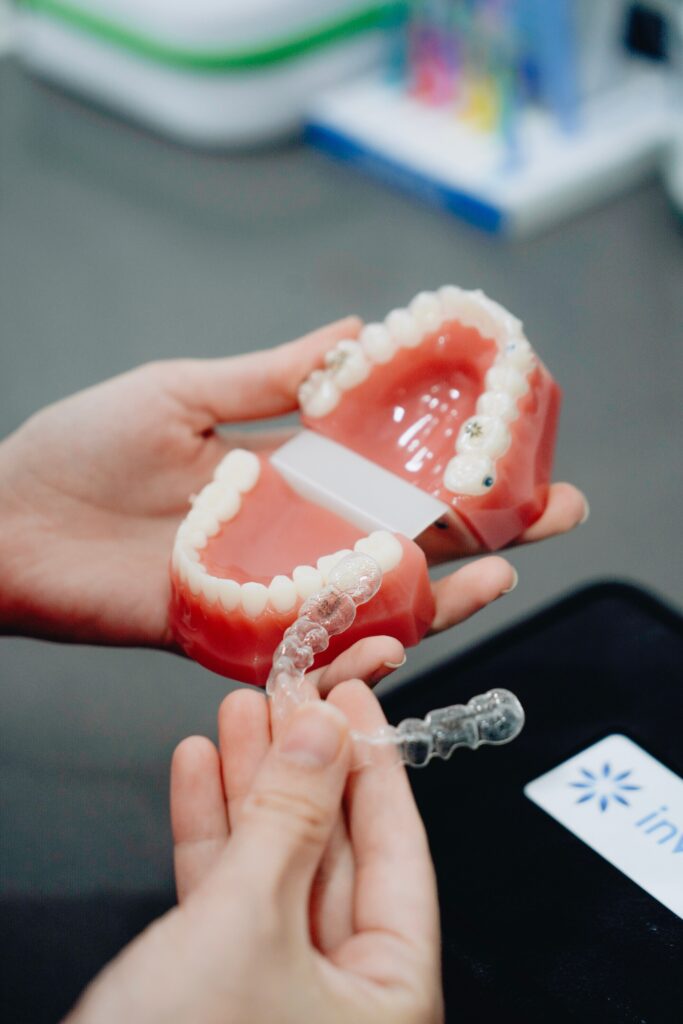
The tray design, the attachment systems, and the digital planning software have all changed substantially since then. Precision attachments (small tooth colored bumps bonded to specific teeth) now give aligners the grip they need to rotate a stubborn canine or intrude an overerupted molar. Elastics can be built into the treatment plan the same way they would be with braces. None of this happened overnight, and none of it is marketing fluff. It is the reason a Beverly Hills Dentist with real orthodontic training can now say yes to cases that would have been an automatic no a decade ago.
What Counts as a Complex Case
Patients often assume “complex” means their teeth are unusually bad. That is rarely the right way to think about it. A case becomes complex when it involves any of the following:
- Significant overbite or underbite where the jaws themselves are misaligned, not just the teeth
- Severe crowding, especially in the lower arch where space is already tight
- Rotated premolars or canines, which resist movement more than front teeth
- Open bite, where the front teeth do not touch even when the back teeth are closed
- Missing teeth that require space closure or preparation for a Porcelain Veneers in Beverly Hills restoration afterward
- Cases involving prior dental work, including beverly hills dental crowns, that need coordinated planning so aligner movement does not compromise existing restorations
If you fall into more than one of these categories at once, which happens more often than you would think, that is when a treatment plan needs real clinical judgment rather than a one size fits all approach.
How Dr. Nazarian Approaches Complex Alignment Cases
I will be direct about this because patients deserve directness when it comes to their smile. Not every complex case belongs to aligners. Part of my job during a consultation is telling a patient when a different path, sometimes a combination approach, will get them a better result faster. That said, the majority of complex cases I evaluate in my Beverly Hills practice are absolutely treatable with a well planned aligner sequence.
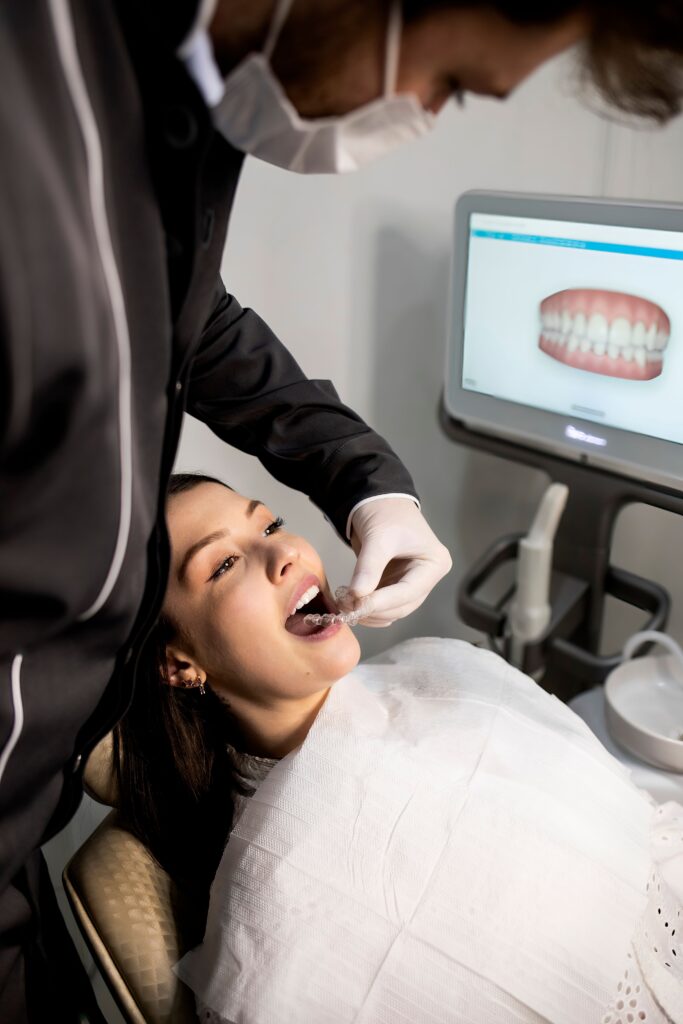
The process starts with a full digital scan, not a quick look and a guess. I map out the entire tooth movement sequence before a single tray is made, which lets me predict where attachments are needed, where elastics will help, and roughly how many months treatment will take. For patients balancing demanding careers, this matters. Nobody wants a surprise six month extension halfway through.
Comprehensive planning is also where cosmetic dentistry and orthodontics start to overlap. If a patient’s long term goal includes Cosmetic Dentistry Beverly Hills work such as veneers or bonding, aligning the teeth first, in the right position, often means the final restorative work looks more natural and lasts longer. I see this constantly. Move the teeth first, restore second, and the whole smile ages better.
For patients who also need beverly hills implant dentistry, sequencing matters just as much. Sometimes the space for an implant needs to be created or refined with aligners before the implant itself is placed. Skipping that step, or rushing it, tends to cause problems years down the line.
The Beverly Hills Advantage: Technology, Discretion, and Time
Clients in this part of Los Angeles tend to have specific, and honestly reasonable, expectations. You want treatment that fits around meetings, travel schedules, and camera time, not the other way around. Clear aligners are genuinely built for that lifestyle in a way braces are not. Trays come off for meals and important events, there is no metal catching the light in photos, and most patients find the adjustment period shorter than they expected.
Beverly Hills practices, including mine, generally have access to newer scanning and treatment planning technology sooner than practices in other markets, simply because demand and investment in premium dental care are higher here. That translates to more accurate predictions, fewer in office adjustments, and a smoother overall experience for patients handling complex movements.
According to the American Association of Orthodontists, clear aligner therapy has become an increasingly common treatment path for cases that once required fixed appliances, a shift driven largely by improvements in material science and digital treatment planning.
Common Questions About Invisalign for Complex Cases
Can Invisalign fix a severe overbite? In many cases, yes. Moderate to significant overbites can often be corrected with aligners when the plan includes precision attachments and, frequently, elastics. Severe skeletal overbites involving the jaw structure itself may need a combination approach, which is something we evaluate case by case during your consultation.
How long does treatment take for a complex case? Complex cases typically run longer than straightforward cosmetic cases, often between twelve and twenty four months depending on how much movement is needed. Your specific timeline comes from the digital treatment plan, not a generic estimate.
Will I need attachments or elastics? Most complex cases do require some combination of attachments and elastics. This is normal and expected. It is what gives modern aligners the ability to handle movements that used to require braces.
Is Invisalign more expensive for complex cases? Pricing generally reflects the length and complexity of treatment rather than the fact that you are using aligners instead of braces. A detailed quote comes after your evaluation, once we know the actual scope of movement required.
A Smile Investment Worth Making Carefully
Straightening your teeth as an adult is not a small decision, and it should not be treated like one. Complex cases in particular deserve a treatment plan built by someone who understands both the orthodontic mechanics and the cosmetic outcome you are picturing. That combination, technical precision paired with an eye for how a smile actually looks and functions long term, is the foundation of my approach to patient care.
If you have been told your case is “too complicated” for Invisalign, or you are simply unsure where you fall on that spectrum, the only real way to know is a proper evaluation. Digital scans do not lie, and they tend to reveal more possibilities than patients expect.
Ready to find out what your smile is actually capable of? Schedule a consultation with Dr. Arminé Nazarian at our Beverly Hills practice and get a treatment plan built around your specific case, not a generic estimate.