Before you commit to anything, a new trainer, a new neighborhood, a significant investment in your appearance, you want the real story. Not the glossy version. Not the rushed overview you get in a five-minute consultation. The actual, unfiltered picture of what you’re getting into, what to expect, and what nobody really warns you about until you’re already mid-treatment.
That’s what this is.
If you’re exploring Invisalign in Beverly Hills and trying to decide whether it’s the right move, you deserve a thorough, honest account of how the treatment works, what it demands from you, and what makes the difference between an outcome you’re proud of and one that falls short. Because Invisalign, like most things worth doing, rewards people who go in prepared.
At Beverly Hills Dentist, Dr. Nazarian has guided hundreds of patients through this process, professionals, executives, public-facing individuals who need results they can trust. The questions they asked before starting treatment are the same ones you probably have right now. This article answers them.
What Is Invisalign Treatment in Beverly Hills?
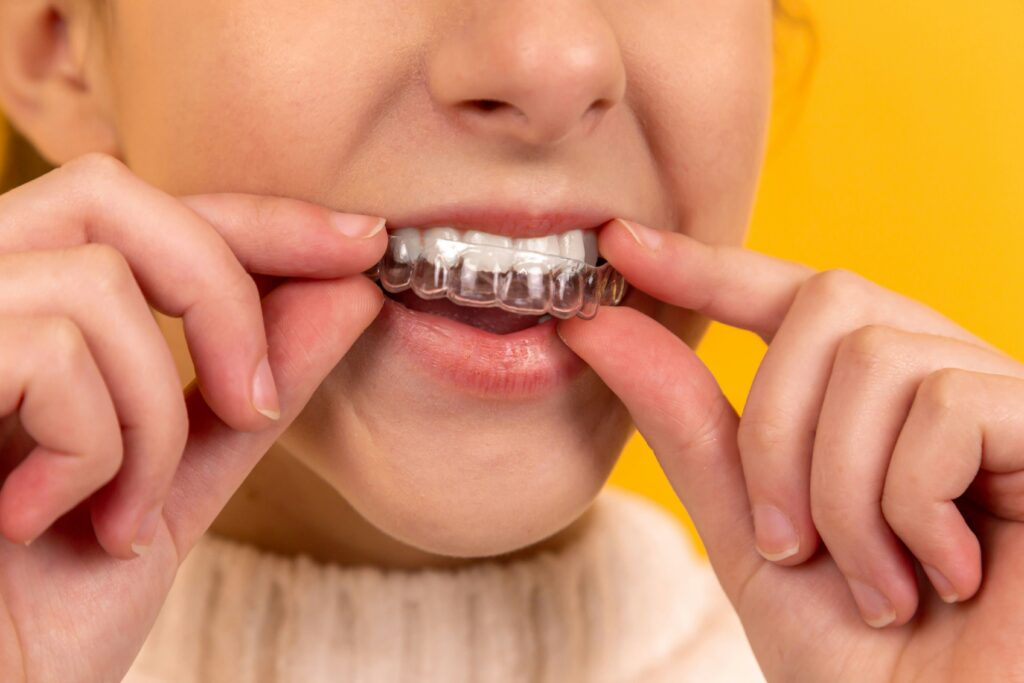
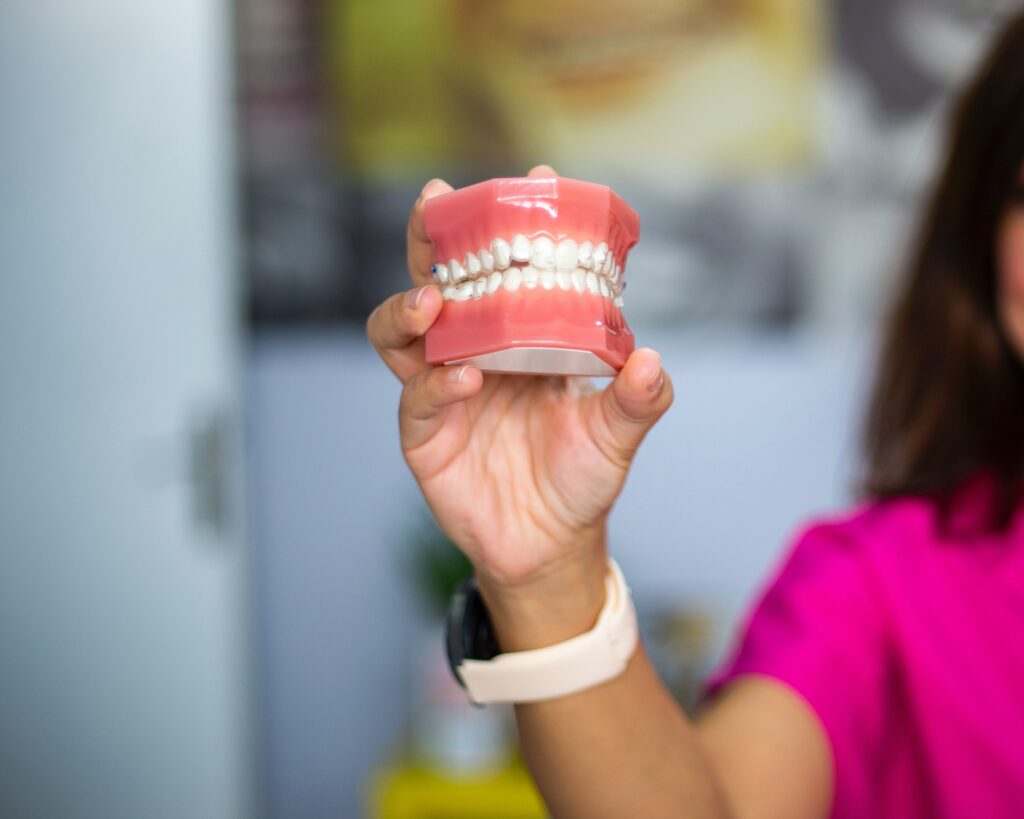
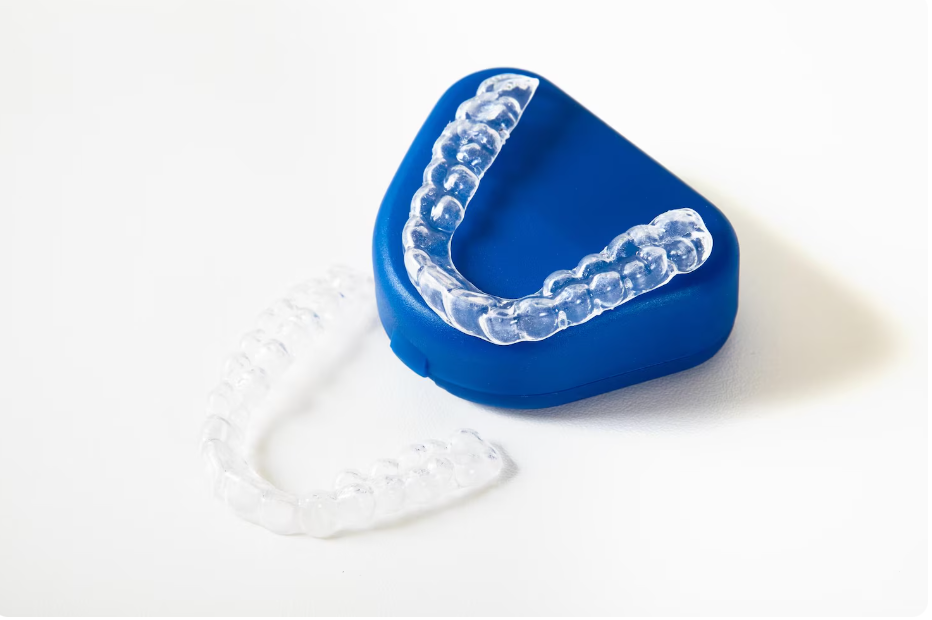
Invisalign treatment in Beverly Hills is a modern orthodontic solution that uses custom-made clear aligners to gradually straighten teeth without metal braces. The treatment is designed for comfort, discretion, and flexibility while correcting issues like crowding, gaps, and bite misalignment under the supervision of an experienced Invisalign provider.
Invisalign Is a System, And Your Compliance Is Half of It
Here’s the first thing to understand, and it’s one that doesn’t always make it into the marketing materials: Invisalign is a partnership. The technology is extraordinary, but the trays can’t do their job sitting on your nightstand.
The clinical standard is twenty to twenty-two hours of wear per day. That leaves two to four hours for eating, drinking anything other than water, brushing, and flossing. It sounds manageable, and it is, but it requires a genuine shift in daily habits. Meals become more deliberate. Snacking between meals becomes something you start to think twice about, both for compliance reasons and because putting trays back in after every handful of almonds gets old quickly.
Patients who treat those twenty-two hours as a firm commitment tend to finish on schedule and with results that closely match their projected outcome. Patients who are loose about it, who frequently stretch meals, who rationalize removing trays “just for an hour”, tend to experience treatment drift: slower progress, trays that don’t fit as snugly when reinserted, and occasionally the need for additional refinement trays at the end.
Dr. Nazarian is direct with patients about this from the very first appointment. Not to be discouraging, but because clarity upfront leads to better results down the line. The technology is only as good as the behavior supporting it.
What Invisalign Can Correct, And Where It Has Limits
Invisalign Beverly Hills treatment today is significantly more capable than it was even a decade ago. The system has expanded its clinical range considerably, and for most adult patients with mild to moderate orthodontic concerns, it’s a completely viable, often superior, alternative to traditional braces.
Crowded teeth, where insufficient space causes teeth to overlap or rotate slightly, are among the most common presentations and among the most reliably corrected with Invisalign. Gaps between teeth, whether a single midline space or multiple small gaps distributed across the arch, respond well to aligner treatment. Overbites, underbites, crossbites, and open bites can all be addressed, though the degree of correction possible varies by severity.
Where Invisalign has limitations is at the more complex end of the spectrum. Significant skeletal discrepancies, where the jaw structure itself is the primary issue rather than tooth positioning, often require orthodontic or surgical intervention that aligners alone can’t provide. Severely rotated teeth, particularly molars, can be difficult to move predictably. And teeth that need substantial vertical repositioning sometimes require supplemental techniques.
The honest answer to “can Invisalign fix my teeth?” is: almost certainly yes, with the right provider, but the only way to know for certain is a thorough in-person evaluation. At Beverly Hills Dentist, Dr. Nazarian takes detailed imaging and a comprehensive look at the bite before recommending any course of treatment. If Invisalign is the right tool, you’ll know why. If it isn’t, or if it’s better combined with another approach, that conversation happens before a single dollar is spent.
The Planning Stage Is Where Great Results Are Won or Lost
One of the most important, and least discussed, aspects of Invisalign treatment in Beverly Hills is what happens before the first tray is ever worn.
Every Invisalign case begins with a digital treatment plan, developed using a platform called ClinCheck. This is where the entire tooth movement sequence is mapped out, aligner by aligner, from the patient’s current position to the projected final outcome. It’s sophisticated, predictive, and genuinely remarkable technology.
But technology is only as good as the hands and eyes guiding it.
A provider who clicks through ClinCheck quickly, accepts default movement suggestions, and sends the plan off without refinement is going to produce different results than one who scrutinizes every stage of the movement sequence, adjusts for aesthetic nuance, accounts for the patient’s specific facial structure, and fine-tunes the outcome to match not just textbook alignment but the way the smile will actually look on that individual’s face.
Dr. Nazarian falls firmly in the second category. The planning phase at this practice is detailed and patient-involved, patients review their projected results, ask questions, and have genuine input into the outcome they’re working toward. It’s one of the things that distinguishes a premium Beverly Hills Invisalign experience from the kind of volume-driven approach you’ll find elsewhere.
If you’re comparing providers, ask about their process for ClinCheck review and refinement. The answer will tell you a lot.
Attachments, Buttons, and the Things Nobody Mentions at the Consultation
Let’s talk about attachments, because a lot of people are surprised by them, and they shouldn’t be.
For more complex tooth movements, Invisalign uses small tooth-colored dots of composite resin bonded directly to certain teeth. These are called attachments or buttons. They create the grip points that allow the aligners to exert the precise directional force needed to move specific teeth in specific ways.
Not every patient needs them. Simple spacing or mild crowding cases often don’t require attachments at all. But for more involved cases, bite corrections, significant rotations, vertical movements, they’re frequently necessary. And while they’re made to match tooth color as closely as possible, they are visible up close. That’s just the reality.
The trays themselves are designed to accommodate the attachments, so they still fit snugly and remain relatively discreet. But if your expectation going in is that Invisalign is completely invisible in all circumstances, it’s worth having a realistic picture. For most patients, in most professional and social contexts, the overall appearance is still dramatically less noticeable than metal braces. It just isn’t always the zero-visibility experience some assume.
Dr. Nazarian discusses attachment needs during the planning stage so patients know exactly what to expect before treatment begins.
Your Diet Doesn’t Change, But Your Relationship With It Does
Unlike traditional braces, where certain foods are genuinely prohibited because they’ll damage the hardware, Invisalign places no restrictions on what you eat. You remove the trays, eat whatever you want, brush, and reinsert. That’s the theory.
In practice, most patients find that their eating habits shift somewhat during treatment, and largely in a beneficial direction. Because reinserting trays after eating requires rinsing or brushing first, the reflexive grab for a snack becomes less automatic. The structural friction of needing to remove trays, eat, clean up, and replace them turns out to be a mild but real deterrent to mindless eating.
Plenty of Invisalign patients have mentioned, sometimes with amusement, sometimes genuine surprise, that they lost a few pounds during treatment simply because the logistics made casual snacking less appealing.
There’s also the matter of what you drink. Water is fine with trays in. Everything else, coffee, tea, wine, juice, sparkling water with flavor, should technically be consumed without the trays, because colored or acidic beverages can stain the plastic and weaken it over time. For the coffee-all-morning crowd in Los Angeles, this is often the adjustment that requires the most deliberate habit-building.
Refinements Are Normal, They’re Not a Sign Something Went Wrong
Somewhere around the midpoint or end of active treatment, many patients undergo what’s called a refinement phase. This involves a new set of impressions or scans, updated ClinCheck planning, and an additional series of trays to fine-tune the result.
Refinements are built into the Invisalign system as a standard part of treatment, not a sign of failure or error. Teeth move biologically, not mechanically, and biological systems don’t always respond with perfect predictability. The refinement phase allows the treatment plan to be recalibrated based on how your teeth have actually moved, rather than how the model predicted they would.
Experienced providers like Dr. Nazarian factor refinements into their treatment estimates and communicate proactively when they’re needed. What you want to avoid is a provider who presents refinements as an unexpected add-on cost. Ask upfront whether refinements are included in your treatment fee, this is a reasonable and important question, and the answer will help you evaluate proposals fairly across different providers.
What Happens After, Retention Is Permanent
Active Invisalign treatment ends. Retention does not.
This is, without question, the part of the process most people underestimate. Once the aligners have moved your teeth into their final position, there’s nothing holding them there except a retainer worn consistently over the long term. Teeth have memory, not literally, but in a practical sense. The fibers and tissues surrounding them exert ongoing pressure that nudges teeth back toward their original positions. Without a retainer, this relapse is essentially inevitable.
The standard protocol following Invisalign treatment in Beverly Hills is nightly retainer wear indefinitely or at minimum, for as long as you want to keep your results. In the first months after treatment, some patients are asked to wear retainers more frequently as the bite settles. Over time, nightly wear becomes the maintenance standard.
Custom retainers are fabricated at the end of treatment and should be replaced periodically as they wear. Dr. Nazarian monitors retention compliance at follow-up appointments and adjusts recommendations based on how stable each patient’s results are showing to be.
Patients who skip retainers, even for a few months, often notice gradual shifting. By the time they come back in, additional intervention is sometimes needed. The retainer is the easiest, cheapest part of the entire process. It deserves to be taken seriously.
How Invisalign Fits Into a Broader Smile Transformation
For many patients, Invisalign isn’t the whole story, it’s the foundation.
Alignment creates the structural basis for a beautiful smile, but it doesn’t address color, shape, or the proportion of individual teeth. Once teeth are in their optimal position, other cosmetic enhancements can be applied with far greater precision and aesthetic effect than if done on a misaligned smile.
A common sequence at Beverly Hills Dentist involves completing Invisalign first, followed by professional whitening, and then for patients seeking a more comprehensive transformation, porcelain veneers in Beverly Hills to refine shape, length, and color in a way that looks completely natural. For patients with structural issues beyond alignment, worn, cracked, or compromised teeth, dental crowns in Beverly Hills may be incorporated as part of the overall treatment plan.
In cases where missing teeth have allowed adjacent teeth to drift and contributed to the misalignment in the first place, implant dentistry in Beverly Hills may be recommended before or alongside orthodontic treatment to restore proper spacing and bite support. The full picture of cosmetic dentistry in Beverly Hills is one where different treatments inform and complement each other, and a provider who sees your smile comprehensively will guide you through that sequence in the right order.
Frequently Asked Questions: What Patients Ask Before Starting Invisalign
Q: How long does Invisalign treatment in Beverly Hills typically take? Treatment duration depends heavily on the complexity of the case. Minor corrections can take as little as six months. Moderate cases typically fall in the twelve to eighteen month range. More involved alignment issues may take longer. Dr. Nazarian provides a personalized timeline estimate after a full evaluation, be cautious of any provider who quotes a timeframe before seeing your imaging.
Q: Is Invisalign painful? Most patients experience pressure, sometimes noticeable, occasionally uncomfortable, for the first day or two after switching to a new tray. This reflects the teeth beginning to move, which is exactly what’s supposed to happen. Over-the-counter pain relievers are typically sufficient if needed. The discomfort is generally far less pronounced than what patients describe with wire-tightening during traditional braces.
Q: Can I play sports or musical instruments with Invisalign? Yes to both, with some nuance. For contact sports, the trays can actually serve as a mild mouthguard, though a proper sports guard is recommended for high-impact activity. For musicians who play wind or brass instruments, there’s often an adjustment period of a few weeks while adapting to the feel of the trays. Most patients adapt fully and report no lasting impact on their playing.
Q: What happens if I lose or damage a tray? Contact your provider immediately. In most cases, you’ll either move to the next tray in the sequence (if you’re close to switching anyway) or have a replacement fabricated. Dr. Nazarian’s team handles these situations routinely and will advise the best course of action based on where you are in treatment.
Q: Will Invisalign affect how I speak? Many patients notice a slight lisp or change in speech when they first begin wearing trays. This is temporary and typically resolves within a few days to a week as the mouth adjusts to the presence of the aligners. Speaking more in those first few days, reading aloud, for instance, helps accelerate the adaptation.
Q: How much does Invisalign cost compared to traditional braces? In Beverly Hills, both Invisalign and traditional braces sit in a similar price range for comprehensive treatment, though Invisalign can run somewhat higher depending on the provider and case complexity. The premium is generally considered worthwhile by patients who place value on the discreet appearance, comfort, and lifestyle convenience. Many patients are also surprised to find that dental insurance covers a portion of Invisalign when orthodontic benefits are included in their plan.
Q: Can teenagers get Invisalign, or is it just for adults? Invisalign Teen exists as a product specifically designed for younger patients, with features like compliance indicators and additional replacement trays built in. That said, the treatment demands real responsibility, and success depends significantly on consistent wear. Dr. Nazarian evaluates teens on a case-by-case basis and has an honest conversation with both the patient and the family about whether the commitment is realistic.
Q: How do I choose the right Invisalign dentist in Beverly Hills? Look for a provider with extensive Invisalign case volume, a clear philosophy around aesthetic outcomes, and a process that involves detailed treatment planning review with the patient. Ask to see before-and-after cases. Ask about what’s included in the fee, specifically refinements and retainers. And pay attention to how the consultation feels: a provider who listens carefully, explains thoroughly, and doesn’t rush you is likely to bring that same attentiveness to your treatment.
Q: What is the difference between an Invisalign dentist and an orthodontist? Both can provide Invisalign treatment. The distinction that matters most is the depth of cosmetic training and the aesthetic philosophy guiding treatment decisions. A Beverly Hills Invisalign dentist like Dr. Nazarian brings a cosmetic lens to the process, considering not just where teeth need to move clinically, but how the outcome will look in the context of the patient’s face, smile line, and overall appearance. That integration of art and science is what separates a functional result from a genuinely beautiful one.
Q: Do I need to visit the office often during Invisalign treatment? Far less than traditional braces require. Check-in appointments are typically scheduled every six to eight weeks so Dr. Nazarian can confirm treatment is progressing as planned, assess fit, and address any questions. The day-to-day management, switching trays, cleaning aligners, happens at home on the patient’s own schedule.
Going In Informed Changes Everything
Most patients who feel uncertain about Invisalign aren’t uncertain about the technology. They’re uncertain because they don’t have the full picture. They’ve heard it’s effective, they’ve seen the results on someone they know, but they don’t quite understand what the day-to-day experience looks like or what the real variables are.
Now you do.
Invisalign in Beverly Hills, done thoughtfully, with an experienced Invisalign dentist in Beverly Hills, and supported by your own commitment to the process, has the potential to deliver exactly what it promises: a straighter, more confident smile, achieved discreetly, comfortably, and without putting your life on hold.
The rest is a conversation. And that conversation starts with one appointment.
Your Next Step Toward a Smile That Finally Fits
If you’ve been sitting on questions about whether Invisalign is right for you, the best thing you can do is stop speculating and start with a real evaluation.
At Beverly Hills Dentist, Dr. Nazarian offers thorough, no-pressure consultations designed to give you exactly what you need to make a clear, informed decision. You’ll leave with a real understanding of your smile, your options, and what treatment would actually look like for your specific case.
Curious whether Invisalign Beverly Hills is the right next step for you? Schedule your consultation with Dr. Nazarian today. The clarity you’ve been looking for starts there.