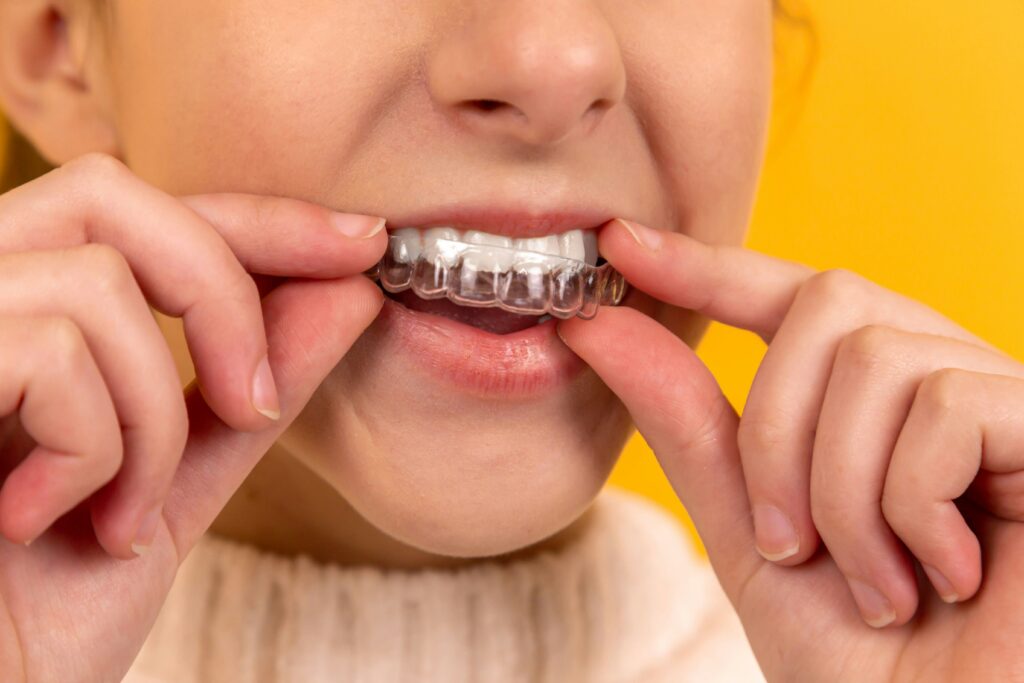
Beverly Hills Invisalign is usually sold as a straight teeth story, and honestly, that is the part everyone wants to hear. But sit with enough patients in the chair around week three of treatment and a different question comes up. “Doctor, why does my bite feel strange?” Or, a little quieter: “Is this doing something to my jaw?”
It is a smart question, and it deserves a better answer than a shrug. So let’s talk about it properly, the way I would if you were sitting across from me with a coffee and a calendar full of meetings.
Beverly Hills Invisalign Moves Teeth, Not Bone
Here is the first thing worth understanding. Aligners move teeth. They do not reshape your jawbone, and they do not push your jaw into a new skeleton. Each tray applies gentle, controlled pressure, and the bone around the tooth roots remodels slowly so the tooth can settle into its new home.
But your jaw does not live in isolation. It meets your teeth every time you chew, swallow, speak, or clench during a tense negotiation. When teeth shift, the way the upper and lower arches meet shifts too. That meeting point is your bite, and it guides how your lower jaw closes. Change the teeth, and you change the road your jaw travels on.
Think of it like resurfacing a street you drive every day. The car is the same, the destination is the same, but for a while you notice every bump.
What Beverly Hills Invisalign Feels Like for Your Bite
Most of my patients in Los Angeles describe the same early sensations. Your back teeth may touch a little differently. A tray can make you bite a fraction harder on one side without you realizing it. Some people feel a dull ache around the jaw hinge in front of the ears during the first few days of a new set.
Most of this is temporary, and it usually settles as your muscles adapt. Your jaw muscles are creatures of habit, and they need a few days to accept a new pattern. Wearing your trays the recommended twenty two hours a day actually helps here, since consistent wear keeps the adjustment steady instead of starting over every time you leave them out.
That said, I never tell a patient to simply tough it out. Persistent pain, clicking that is new, or a jaw that feels locked deserves a conversation, not patience.
Beverly Hills Invisalign and the Jaw Joint Question
The temporomandibular joint, or TMJ, is the hinge that connects your lower jaw to your skull. Plenty of high performing professionals walk around with a stressed jaw joint without knowing it. Late nights, deadlines, grinding at night. I see it often in executives who tell me they sleep fine but wake up with tight cheeks.
So where do aligners fit in? The honest answer is that it depends on the person. For some patients, correcting a crowded or uneven bite spreads the chewing forces more evenly, and jaw tension can ease over time. For others, especially those who already clench, the early weeks may feel more noticeable before things improve. Invisalign is not a cure for TMJ disorders, and any dentist who promises that is oversimplifying. If you want a neutral overview of the condition itself, the Mayo Clinic explains TMJ disorders in clear detail.
What I can say is this. A bite that closes comfortably and evenly tends to be kinder to the jaw than one that fights itself. Good alignment is not only about the photograph. It is about how your face works at two in the afternoon, mid sentence, mid bite.
When Jaw Position Needs More Than Aligners
Sometimes the issue is not the teeth at all. A significant overbite, underbite, or a jaw that sits noticeably back or forward can be skeletal, meaning it comes from the size or position of the bones. Aligners alone cannot solve those cases, and pretending otherwise would be doing you a disservice.
In mild to moderate cases, a carefully planned aligner treatment can improve how the teeth fit together and, in many patients, improve the way the jaw rests and closes. In more complex ones, I may recommend combining treatment with an orthodontist or an oral surgeon. Knowing where that line sits is, frankly, a large part of what experience is for.
This is also where your wider smile goals come into play. Some patients come in wanting a single visible improvement and leave with a bigger plan. If your teeth are worn from years of grinding, for example, porcelain veneers in Beverly Hills or beverly hills dental crowns may later restore shape and protect what is left, once the bite has been properly settled. And if a missing tooth is throwing your bite off, beverly hills implant dentistry can rebuild that support so the aligners have something stable to work around.
Why Planning Matters More Than the Plastic
Anyone can hand you a set of trays. What separates a good result from a merely acceptable one is the planning behind them.
At our practice, Dr. Arminé Nazarian begins with a thorough evaluation of your bite, your jaw joints, your gum health, and the proportions of your smile. Digital scans replace the old goopy impressions, and we can preview how your teeth are expected to move before the first tray is ever made. It is quicker, far more comfortable, and it lets us catch bite concerns early instead of discovering them halfway through.
My philosophy as a cosmetic dentist is simple. A beautiful smile should be built on a healthy bite, not the other way around. Patients here are often busy people with little patience for revisions, so I would rather spend extra time in planning and save you months of correction later.
As a Beverly Hills Dentist who has treated many patients across Los Angeles, I have learned that the people who love their results most are not the ones with the flashiest transformation. They are the ones who forget they ever had an issue. Their smile looks like theirs, only quietly better, and their jaw feels at ease.
Why Discretion Matters in Beverly Hills
Many of my patients are attorneys, entrepreneurs, entertainers, and executives who cannot afford to walk into a boardroom with visible metal. Clear aligners are nearly invisible, removable for important dinners and presentations, and generally require fewer office visits than traditional braces.
There is also something to be said for the emotional side. A person who has quietly hidden their smile in photographs for fifteen years often changes how they carry themselves once treatment begins. Shoulders drop. Laughter comes easier. That kind of confidence is hard to put a price on, and it is a big reason people see their smile as a long term investment rather than a cosmetic luxury.
If you would like to see how aligners fit into a broader plan, our cosmetic dentistry Beverly Hills page walks through the full range of options.
Beverly Hills Invisalign Questions Patients Ask Most
Does Invisalign change your jaw position?
Invisalign changes how your teeth fit together, which can influence how your jaw closes. It does not reshape the jawbone itself.
Can Invisalign cause jaw pain?
Mild soreness during the first days of a new tray is common. Ongoing or worsening jaw pain is not normal and should be evaluated promptly.
Can Invisalign help with TMJ symptoms?
In some patients, a more balanced bite may reduce strain on the jaw. It is not a guaranteed treatment for TMJ disorders, and each case needs individual assessment.
How long does treatment take?
Many adults finish in roughly six to eighteen months, depending on complexity. Your own timeline will be mapped out at your consultation.
Is Invisalign right for everyone?
Not always. Severe skeletal discrepancies may need additional care. An honest evaluation is the only way to know.
Your Next Step
If your bite feels off, your jaw feels tight, or you simply want a straighter, more refined smile without the world noticing, now is a good time to start the conversation. Beverly Hills Invisalign works best when it is planned around your whole face, not just your front teeth.
Schedule a private consultation with Dr. Nazarian and let us look at your bite, your goals, and your timeline together. You will leave with a clear plan and no pressure. Call our Beverly Hills office or book your visit online today.