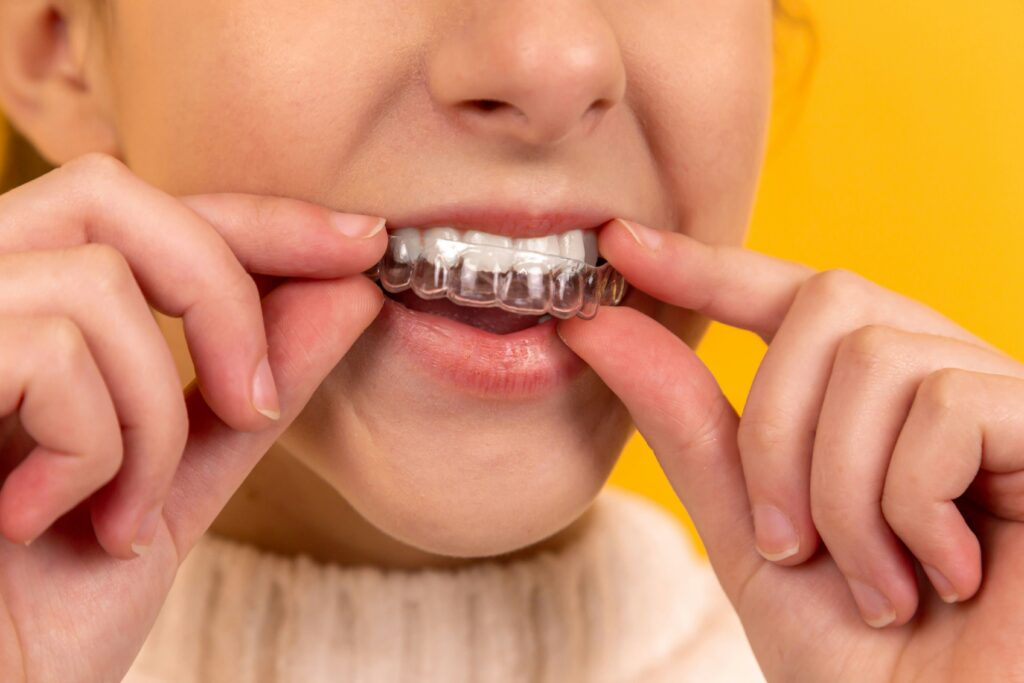
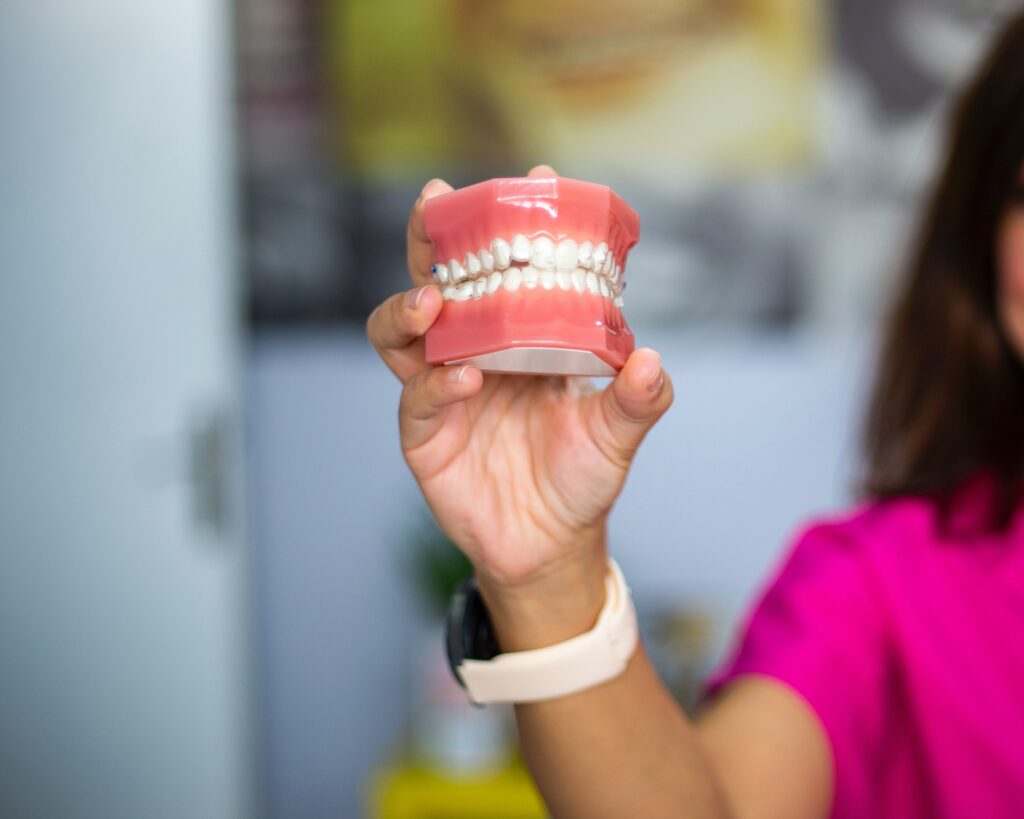
A smile shapes more than photographs. It shapes how confidently you speak in a client meeting, how freely you laugh on camera, and how you carry yourself in a room. For many adults, crowded teeth or visible gaps quietly get in the way of that confidence for years before they ever book a consultation.
That’s a big part of why Beverly Hills Invisalign treatment has become one of the most requested cosmetic dental solutions among professionals across Beverly Hills, West Hollywood, and the greater Los Angeles area.
Adult orthodontics has changed dramatically in the last decade. According to the American Association of Orthodontists’ 2025 patient census, roughly 1.91 million adults were in active orthodontic treatment nationwide — up from 1.64 million just two years earlier — and adults now make up about one in three orthodontic patients overall. Invisalign is a major reason for that shift: clear aligners let patients straighten their teeth without the visible metal and wires of traditional braces.
Dr. Arminé Nazarian treats Invisalign not as a generic straightening tool, but as a cosmetic procedure in its own right — one where tooth position, gum line, and facial symmetry are planned together from the start.
Why Crowded Teeth and Gaps Matter More Than Most People Realize
Most patients come in because they don’t like how their smile looks. That’s reason enough. But crowding and spacing issues often affect more than appearance.
Crowded teeth make brushing and flossing genuinely harder to do well. Over time, that can mean more plaque buildup, gum inflammation, and a higher risk of decay in the spots a toothbrush can’t reach.
Gaps behave differently. Depending on size and location, spacing can throw off bite balance, change how efficiently you chew, and in some cases affect speech.
Left uncorrected, these issues can contribute to:
- Uneven tooth wear
- Jaw tension
- Gum recession
- Higher cavity risk
- Chronic difficulty cleaning between teeth
Straightening the smile isn’t only cosmetic — it removes a source of ongoing oral health risk.
Why Beverly Hills Professionals Choose Invisalign
Executives, attorneys, physicians, entertainers, and entrepreneurs share a common constraint: they can’t disappear behind a mouth full of metal for two years. Traditional brackets and wires are visible in exactly the moments — presentations, interviews, client dinners — where these patients need to look and feel their best.
Invisalign’s clear, custom-fitted aligners solve that problem. They’re removable, nearly invisible in conversation, and don’t interrupt a demanding schedule the way frequent bracket adjustments do.
A Beverly Hills dentist working with this patient base understands that treatment has to fit the lifestyle, not the other way around — which is exactly why Beverly Hills Invisalign treatment has become the default option for image-conscious adults in the 90210 area and beyond.
How Invisalign Corrects Crowded Teeth
Crowding happens when the jaw doesn’t have enough space for every tooth to sit properly, so teeth overlap, rotate, or push forward and back.
Invisalign corrects this with a series of custom, sequential aligner trays that apply controlled, gradual force to shift teeth into their planned final position. Treatment generally follows this path:
- Digital smile evaluation and bite analysis
- 3D treatment planning and simulation
- Custom aligner fabrication
- Progressive tooth movement, tray by tray
- Periodic in-office progress checks
Published success rates for mild-to-moderate crowding cases with Invisalign run around 80–90%, which is why so many crowding cases that once required more invasive correction can now be resolved with aligners alone.
How Invisalign Closes Gaps
Spacing issues have several causes: naturally wide-set teeth, shifting after tooth loss, gum changes, bite imbalance, or relapse after prior orthodontic work.
Invisalign closes these gaps the same way it corrects crowding — through calibrated pressure applied tray by tray. Common cases include:
- Front tooth (diastema) spacing
- Multiple small gaps throughout the arch
- Relapse after previous braces
- Shifting following tooth loss
Even a single visible gap can throw off the symmetry of an otherwise attractive smile, so closing it often produces a disproportionately large aesthetic improvement relative to the amount of movement involved.
What Treatment Actually Feels Like
Part of Invisalign’s appeal is simply how little it disrupts daily life. Aligners come out for eating, brushing, flossing, and important events, and most patients need aligner-check visits far less often than they’d need adjustment appointments with braces.
For patients balancing this with a full calendar in Los Angeles, that difference in visit frequency is often the deciding factor.
A realistic expectation, based on current industry data, is an average total treatment time in the range of 12 to 22 months, worn 20–22 hours per day, with mild pressure after switching to each new tray that typically resolves within a day or two.
Why Treatment Planning — Not Just the Aligners — Determines the Result
Not every Invisalign provider plans treatment the same way, and that difference shows up in the final result.
The aligner trays are a manufacturing product. What separates an average outcome from an exceptional one is the plan behind them. Dr. Nazarian evaluates each case for:
- Facial symmetry
- Bite mechanics
- Gum architecture
- Smile width relative to the face
- Individual tooth proportions
That’s the difference between a smile that’s simply straighter and one that looks genuinely designed.
Can Invisalign Replace Veneers?
It depends on the case.
For some patients, alignment alone delivers the transformation they’re after. For others, Invisalign is the first phase, straightening the foundation so that a smaller, more conservative amount of cosmetic work (veneers or bonding) can finish the result.
If a more comprehensive transformation is the goal, our Porcelain Veneers in Beverly Hills page covers how veneers refine tooth shape, color, and symmetry once alignment is addressed. Our Cosmetic Dentistry Beverly Hills page walks through how Invisalign fits into a full smile plan built around both appearance and long-term oral health.
The Technology Behind the Treatment Plan
Invisalign treatment today is built almost entirely on digital tools. Digital intraoral scanning replaces the old physical impression trays, and 3D simulation lets patients preview their projected final result before committing to treatment.
Dr. Nazarian uses this technology- digital scanning, bite analysis, and precision treatment mapping- to plan each case with a level of predictability that wasn’t possible with earlier orthodontic methods. Patients see the roadmap before they start, which builds trust in the plan from day one.
Why It’s Worth Doing
A well-aligned smile isn’t a short-term cosmetic purchase; it’s a long-term investment in oral health, appearance, and how comfortably you move through your day. Patients considering broader restorative work sometimes pair Invisalign with other treatments, such as Dental Implants in Beverly Hills or dental crowns, depending on their overall dental needs.
For general educational background on orthodontic treatment, the American Association of Orthodontists is a helpful independent resource.
Schedule Your Invisalign Consultation
If crowded teeth or visible gaps have been holding back your smile, Dr. Arminé Nazarian offers customized Beverly Hills Invisalign treatment built around precision, aesthetics, and your actual schedule.
Call our Beverly Hills office today to schedule your Invisalign consultation and find out whether clear aligners are the right fit for your smile.
Frequently Asked Questions
Is Invisalign painful? Most patients feel mild pressure for a day or two after switching to a new tray. It’s temporary and manageable, and rarely compares to the soreness associated with wire adjustments in traditional braces.
How long does Invisalign take? It depends on complexity. Simple cases can finish in several months; more involved crowding or spacing cases may take up to two years.
Is Invisalign effective for severe crowding? Moderate cases respond very well. Severe crowding is treatable in many cases too, but needs an individualized evaluation, sometimes in combination with other procedures.
Will people notice I’m wearing Invisalign? In nearly all cases, no. That discretion is the main reason so many Beverly Hills professionals choose it over visible braces.
How many hours a day do I need to wear my aligners? 20 to 22 hours daily is the standard target for staying on schedule.