Here’s something that doesn’t get said enough: the “best” orthodontic treatment isn’t universal. It’s personal. And yet, every week, people walk into consultations having already decided based on a friend’s experience, a Reddit thread, a before-and-after they saw on Instagram which path they’re going to take. Sometimes they’re right. Sometimes they’ve spent months convinced about a treatment that isn’t actually the right fit for their case.
The conversation between Invisalign and traditional braces has shifted dramatically over the past decade. What used to be a fairly simple comparison clear vs. metal, convenient vs. reliable has become considerably more nuanced. Both systems have evolved. Both have genuine strengths. And the gap between them, which once felt wide, has narrowed in ways that even many patients don’t realize.
For adults in Los Angeles, particularly those weighing their options at a Beverly Hills Invisalign dentist. The choice usually comes down to a combination of clinical factors and lifestyle ones. Dr. Nazarian, who has guided hundreds of patients through exactly this decision at Beverly Hills Dentist, takes a position that’s less about advocating for one system and more about matching the right tool to the right person. That distinction, small as it sounds, makes all the difference.
What Is the Difference Between Invisalign and Braces?
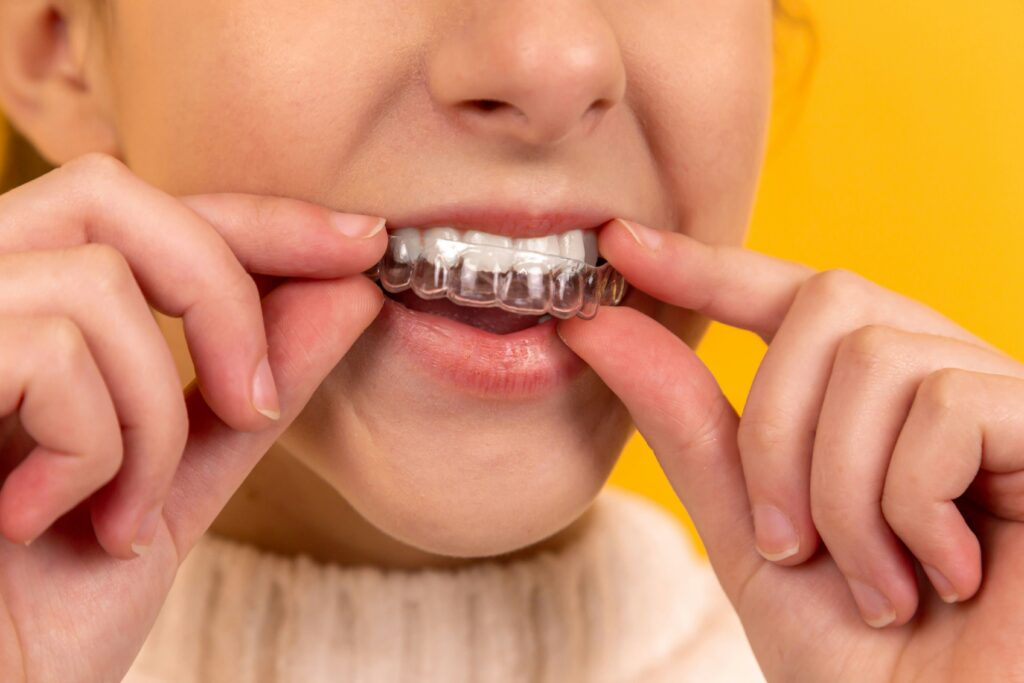
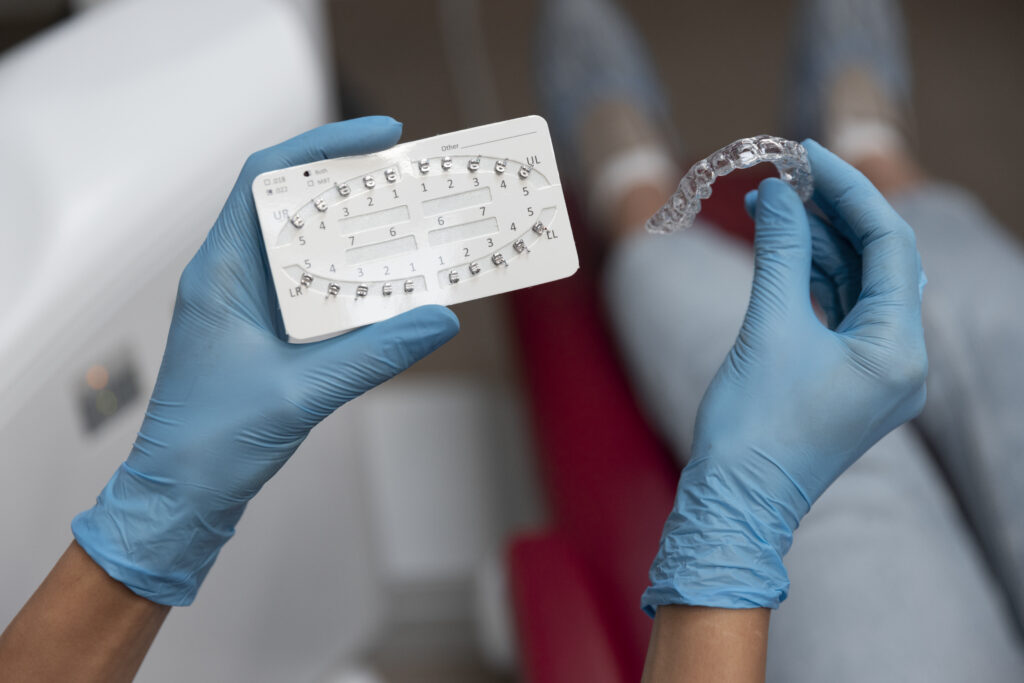
Invisalign uses clear, removable aligners to gradually shift teeth with discreet, flexible wear, while traditional braces rely on fixed brackets and wires to apply continuous pressure. Braces are often better for complex cases, whereas Invisalign appeals to those prioritizing aesthetics and convenience for mild to moderate alignment issues.
How Each System Actually Works Beyond the Surface Level
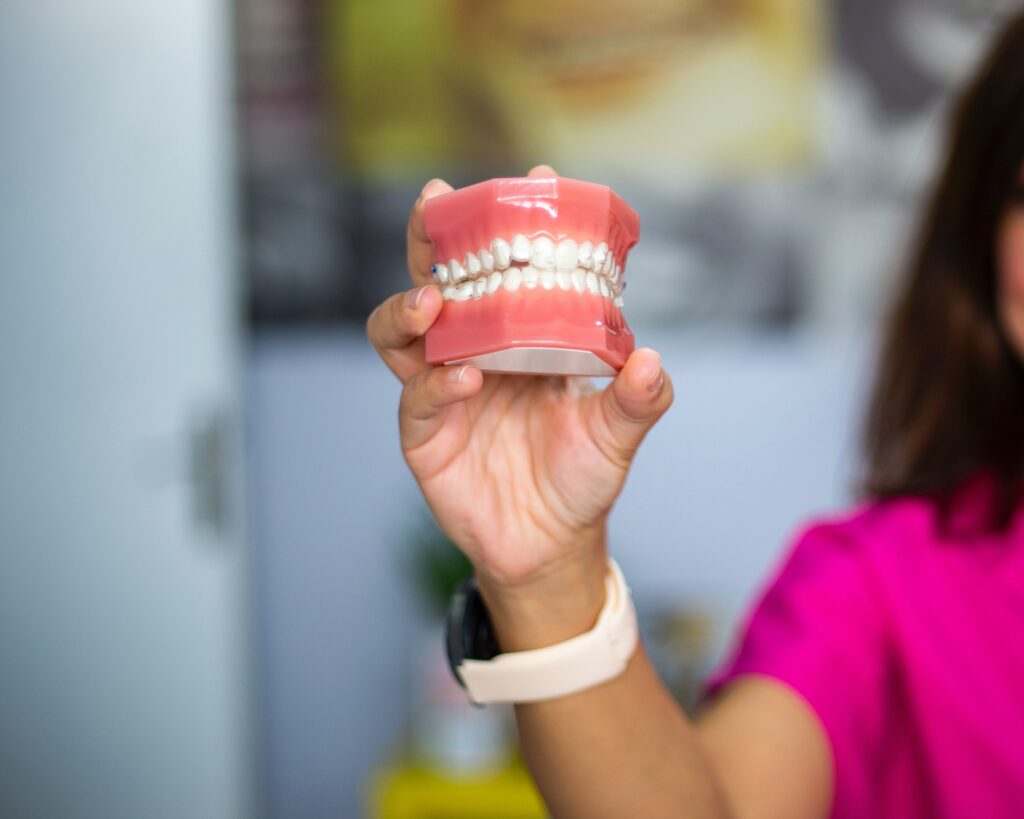
Most people have a general sense of how both treatments work. Braces use metal brackets bonded to the teeth, connected by wires that an orthodontist adjusts periodically to apply gradual pressure. Invisalign uses a series of custom-fabricated clear aligner trays replaced roughly every one to two weeks that shift teeth incrementally toward a pre-planned endpoint.
What’s less commonly understood is how differently each system moves teeth, and why that matters.
Traditional braces apply continuous, passive force. The wire is always doing something, even when you’re asleep, because it can’t be removed. This makes braces particularly effective for complex three-dimensional tooth movements, significant rotations, vertical shifts, and cases that require precise control over multiple teeth simultaneously over an extended period.
Invisalign works through controlled, programmed force delivered in short cycles. The trays are designed using 3D digital modeling software (ClinCheck) that maps out each individual movement across every tray in the sequence. It’s an extraordinarily precise system, but one that depends heavily on two things: the quality of the digital treatment plan and the patient’s compliance with wearing the trays.
Neither system is inherently superior. They work differently, and those differences matter depending on what needs to be corrected.
What Dental Experts Consider When Making a Recommendation
When a clinician like Dr. Nazarian sits down with a new patient to discuss orthodontic options, the conversation doesn’t start with aesthetics. It starts with a diagnosis.
Complexity of the case. Mild to moderate crowding, spacing issues, and many bite corrections fall comfortably within Invisalign’s wheelhouse. Severe crowding, significant bite problems, or cases requiring substantial vertical tooth movement may still benefit from the continuous force mechanics of braces, though advances in Invisalign’s technology have brought many of these cases within its reach as well.
Patient compliance. This is the factor that tips the scale more often than people expect. Invisalign requires twenty to twenty-two hours of wear per day to work as designed. For highly motivated adults who understand that discipline, it’s not an issue. For younger patients or anyone with a history of not following through on dental care routines, removability becomes a liability rather than a feature. Braces, because they can’t be taken out, remove compliance from the equation entirely.
Age and lifestyle. For adults, particularly professionals, executives, and image-conscious individuals navigating high-visibility careers, the discreet nature of Invisalign in Beverly Hills carries real professional and social weight. For teenagers and adolescents, braces often remain the first recommendation precisely because compliance is more reliable when the patient doesn’t control whether the appliance stays in.
Treatment timeline expectations. Both systems take time, and anyone who tells you otherwise is oversimplifying. But in cases where Invisalign is clearly appropriate, treatment can sometimes be completed in less time than traditional braces, particularly for moderate corrections. Complex cases with either system will take however long they take.
Existing dental work. Bridges, crowns, and implants can affect how either system is applied. Patients exploring cosmetic dentistry in Beverly Hills that might involve dental crowns or porcelain veneers often benefit from a sequenced treatment plan orthodontics first, restorative or cosmetic work after and Dr. Nazarian’s comprehensive approach accounts for that full picture from day one.
The Honest Case for Invisalign
For the right candidate, Invisalign isn’t just comparable to braces, it’s genuinely better. Not because it’s newer or more expensive, but because of what it offers a specific kind of patient living a specific kind of life.
The removability that some see as a compliance risk is, for most adults, an enormous practical advantage. You eat whatever you want. You brush and floss normally. You don’t spend twenty minutes with a Waterpik trying to clean around brackets. For people who already prioritize their dental health, Invisalign fits into their routine without disruption.
The aesthetics aren’t incidental, either. In professional environments like courtrooms, boardrooms, client-facing roles, entertainment. Metal braces carry a certain visual weight that Invisalign simply doesn’t. Patients who’ve gone through Beverly Hills Invisalign treatment at Dr. Nazarian’s practice frequently mention that their colleagues never even noticed they were in treatment. That kind of invisibility has tangible professional value.
There’s also the comfort factor, which is real and significant. No wires. No brackets rubbing against soft tissue. No emergency appointments because a wire has come loose. The trays are smooth, custom-fitted, and designed to cause only the mild pressure that signals they’re working. The transition between trays typically the first day or two of each new set involves temporary tightness, but nothing that disrupts daily function.
And perhaps most underrated: the digital planning process. Seeing your projected outcome before treatment begins like watching the 3D animation of how your teeth will move, tray by tray changes the patient experience in a meaningful way. You’re not waiting eighteen months to see what you end up with. You have a mapped, visual destination from the start.
The Honest Case for Traditional Braces
Braces haven’t survived this long by being obsolete. For certain cases and certain patients, they remain the gold standard and no credible clinician would tell you otherwise.
When correction requires significant force over a prolonged period. severe rotations, extensive bite correction, complex multi-directional movements. Braces still offer a level of mechanical control that aligners can struggle to match. The continuous nature of their force application means the teeth are always progressing, without any variable introduced by human behavior.
For younger patients especially, braces eliminate the single biggest risk factor in Invisalign treatment: forgetting to put the trays back in. A teenager who takes their aligners out during lunch and doesn’t replace them for four hours a day is looking at a treatment that will run longer than projected, or worse, produce incomplete results. Braces don’t give that option.
Modern braces have also improved considerably. Clear or ceramic brackets offer a far less conspicuous appearance than the metal brackets most adults remember from their own adolescence. Lingual braces placed on the inside surface of teeth are essentially invisible from the front. The idea that braces are automatically the “ugly” option is increasingly outdated.
Cost can also factor in, particularly for families or patients without comprehensive dental coverage. Invisalign treatment in Beverly Hills is premium orthodontic care, and pricing reflects that. For complex cases requiring extended treatment, traditional braces may represent a more cost-effective path to a comparable outcome.
When Orthodontist Recommend Both or Neither Alone
One thing that surprises a lot of patients: sometimes the answer isn’t a clean either/or.
There are cases where a brief period of conventional orthodontic appliances is used to address a specific movement before transitioning to Invisalign for the remainder of treatment. There are cases where Invisalign corrects alignment before restorative work, implant dentistry in Beverly Hills, veneers, or crowns, addresses shape, color, or structural concerns. There are even cases where Invisalign handles the primary correction and a short course of braces fine-tunes the bite at the end.
This is the kind of nuance that gets lost in online comparisons. Real orthodontic treatment, the kind practiced at a practice like Beverly Hills Dentist isn’t a binary choice made from a menu. It’s a clinical plan built around a specific person’s mouth, face, dental history, and goals.
Dr. Nazarian’s treatment philosophy reflects this. Rather than defaulting to a preferred system, the practice evaluates each case on its merits and recommends whatever combination of approaches will produce the best, most lasting result. That patient-centered orientation is what distinguishes elite cosmetic and orthodontic dentistry from the kind that simply processes cases.
Invisalign vs. Braces Cost in Beverly Hills: What to Expect
The cost is real, and it deserves a direct answer.
In Beverly Hills and the broader Los Angeles market, Invisalign treatment typically ranges from $4,000 to $8,500+, depending on complexity and treatment duration. Traditional braces metal generally range from $3,000 to $6,000 for similar cases. Ceramic or clear braces fall somewhere in between, as do lingual options, which tend to be among the more expensive conventional approaches due to the technical demands of placement.
Dental insurance may cover a portion of orthodontic treatment for both systems, though coverage varies widely by plan. Many practices, including Beverly Hills Dentist, offer in-house financing options that spread treatment costs over time without requiring everything upfront.
The framing that matters here: orthodontic treatment, regardless of system, is a long-term investment. The cost of not addressing misalignment, uneven wear, increased cavity risk, jaw issues that develop over years, often exceeds the cost of treatment. A good orthodontic outcome, maintained with proper retention, pays dividends for decades.
Invisalign vs. Braces: Frequently Asked Questions
Q: Is Invisalign as effective as braces for most adults? For mild to moderate cases, which describe the majority of adult orthodontic needs absolutely. Invisalign technology has advanced to the point that it handles a broad range of corrections with clinical outcomes comparable to braces. For complex cases, traditional braces may still offer advantages in terms of force control, and your dentist will tell you honestly which category your case falls into.
Q: How long does Invisalign take compared to braces? It depends entirely on the case. Mild corrections with Invisalign can be completed in as few as six months. More involved treatment may run twelve to twenty-four months, similar to braces for comparable complexity. Treatment duration with traditional braces typically ranges from eighteen to thirty-six months for comprehensive cases. Anyone promising a specific timeline before seeing your full records is guessing.
Q: Can I switch from braces to Invisalign mid-treatment? In some cases, yes. Patients who started with braces for initial complex corrections sometimes transition to Invisalign for the refinement phase of treatment. This decision depends on where your teeth are at the teeth are at the transition point and what still needs to be accomplished. Dr. Nazarian evaluates these cases individually.
Q: Does Invisalign work for overbites and underbites? Modern Invisalign treatment, particularly with precision bite ramps and mandibular advancement features, has made significant strides in bite correction. Many overbites and underbites that would previously have required braces can now be addressed with Invisalign alone. Severe skeletal discrepancies, where the jaw structure itself is the issue that may still require surgical or combined approaches.
Q: Will insurance cover Invisalign treatment in Beverly Hills? Many dental insurance plans that include orthodontic benefits will apply the same coverage to Invisalign as they would to traditional braces, up to the plan’s lifetime orthodontic maximum. It’s worth calling your insurance provider directly to confirm your specific benefits before your consultation.
Q: What’s the biggest mistake patients make with Invisalign? Not wearing the trays consistently. Twenty-two hours a day is the minimum, not a suggestion. Patients who take their trays out for long stretches, meals that run long, social events, periods of discomfort end up with extended treatment timelines or, in some cases, incomplete results that require additional trays to correct.
Q: At what age is Invisalign appropriate? There’s a teen-specific version (Invisalign Teen) designed for patients whose teeth are still developing. For adults, there’s no upper age limit, provided gum and bone health supports tooth movement. Dr. Nazarian treats patients across a wide age range with Invisalign, and outcomes in motivated adult patients are consistently excellent.
Q: Is there anything Invisalign simply cannot do that braces can? For certain extreme rotations, significant vertical tooth movements (intrusion or extrusion), and severe skeletal bite discrepancies, traditional appliances may still offer advantages. The list of things Invisalign can’t do has shrunk considerably over the years, but it hasn’t reached zero. A thorough consultation will identify whether your case falls into that remaining category.
Q: How do I find a qualified Invisalign dentist in Beverly Hills? Look for a provider with documented Invisalign experience, access to the full digital planning suite (ClinCheck), and a track record in cosmetic dentistry not just orthodontics. A dentist who understands the aesthetic dimension of smile design, not just tooth mechanics, will produce better outcomes for patients who care about how their smile looks, not just how it functions.
Q: What happens if I’m not happy with my Invisalign results? Refinements are a normal part of the process. After your initial aligner series is complete, your dentist evaluates the outcome and determines whether additional trays are needed to achieve the target result. Dr. Nazarian includes refinements in the treatment plan and sees cases through to completion, not just to the end of the original tray series.
The Bottom Line from a Beverly Hills Perspective
The Invisalign vs. braces debate has a different texture in a market like Beverly Hills than it does elsewhere. Here, the patients asking the question are often executives, professionals, performers, entrepreneurs people for whom appearance and confidence carry real stakes. The aesthetic argument for Invisalign isn’t abstract. It’s daily and practical.
But the clinical answer remains the same regardless of zip code: the best treatment is the one that’s appropriate for your case, executed by someone with the skill and experience to do it right.
At Beverly Hills Dentist, Dr. Nazarian brings both dimensions together, the technical precision to deliver results that hold up clinically and the aesthetic sensibility to ensure those results look genuinely beautiful. Whether that means Invisalign, a combination approach, or a broader smile redesign that incorporates cosmetic dentistry in Beverly Hills, the recommendation will always be grounded in what actually serves you best.
That’s a different standard than most people are used to. But it’s the right one.
Curious Which Treatment Is Right for You?
The only way to know for certain is to have someone look at your actual teeth, not your photos, not a generic online quiz, but a real clinical evaluation with 3D imaging and a conversation about your goals.
Dr. Nazarian at Beverly Hills Dentist offers comprehensive consultations for patients considering both Invisalign and traditional orthodontic treatment. You’ll walk away with a clear clinical picture of your options, honest insight into what each path looks like for your specific case, and no pressure to commit to anything until you’re ready.
Book your consultation today and find out, once and for all, what the right path looks like for your smile.